Posts

Showing posts with the label Kukri

Cutting Edge Analysis: Is Kukri better than Machete?

Image
Choosing between a Kukri and a machete can be a bit like deciding between pizza and burgers – both are awesome, but it depends on what you're in the mood for! Let's dive into the world of these cutting companions and figure out which one might be your perfect slicing sidekick. Kukri: The Curvy Wonder The kukri is like the cool kid in the knife world with its unique, curvy shape. It's got a thick spine that slopes down to a sharp edge, making it great for chopping and slicing. Originally from Nepal, the kukri has been a reliable tool for centuries, and it's even part of the Gurkha tradition. Machete: The Straight Shooter On the other hand, we have the Machete – the straight shooter of the cutting crew. With a long, straight blade, the machete is a versatile tool used all around the world. It's your go-to for clearing brush, cutting through thick vegetation, and even doing some rough-and-tough chopping. Battle of the Blades: Which One Wins? Now, let's get down t...
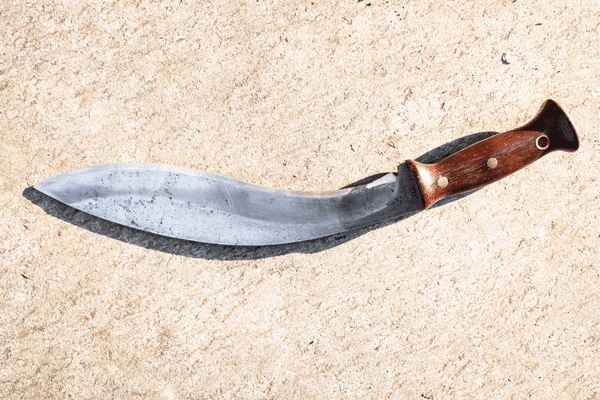
Blades Unveiled: Contrasting the Falcata and the Kukri.

Image
In the world of edged weapons, the Falcata and the Kukri stand as distinct symbols of martial tradition, each with its own unique design and cultural roots. This article aims to delve into the nuances that differentiate the Falcata, an ancient Iberian sword, and the Kukri, a renowned Nepalese knife. From their distinctive shapes to historical significance, we explore the fascinating differences between these two blades. The Falcata: Iberian Elegance and Power Design and Characteristics Originating in the Iberian Peninsula around the 5th century BCE, the Falcata boasts a distinctive curved single-edged blade. The forward-leaning hilt and the curvature of the blade, resembling a sickle, contribute to its unique design. Crafted for versatility, the Falcata is known for its ability to deliver powerful slashing blows and precise thrusts. Historical Context The Falcata played a pivotal role in Iberian warfare, notably during conflicts such as the Second Punic War. Its design, emphasizing a ...